
3.10 "Black point" of grain
The causative agents of this disease are Alternaria alternata (Fr.) Keisl., (syn.: Alternaria tenuies Nees), Bipolaris sorokiniana Sacc. (syn.: Helminthosporium sativum P. K. et. В.).
The black point disease primarily affects the embryonic region of the wheat kernel, appearing as dark discolourations of varying size. These symptoms are particularly prevalent in seasons characterised by elevated humidity levels during the grain filling phase. The disease can be categorised into two distinct forms - alternariosis and helminthosporiosis -depending on the dominant fungal species involved. In cases of helminthosporiosis, Helminthosporium sativum invades both the germ and the surrounding husk, often leading to shriveled grains with poor laboratory germination rates. Seedlings that emerge from such seeds frequently exhibit symptoms of root rot. It has been shown that wheat becomes susceptible to H. sativum infection during the flowering stage, particularly when the grain reaches its waxy maturity. Conversely, in alternariosis-associated black point, the fungal agent - Alternaria spp. -remains confined to the seed coat, endosperm, and aleurone layer, typically without negatively impacting germination capacity (Kuzmina, 1977).
Research into the causes of black point disease in wheat grown in Northeast Kazakhstan has indicated that A. tenuis is localised within the outer layers of the grain, without infiltrating the embryonic tissues.
"Black point" of grain is a widespread disease of wheat in Kazakhstan, particularly in the northern and eastern regions.
When seeds are placed in a moist chamber and maintained at a temperature between 20 and 25 °C, they typically develop a dense, dark olive to grey fungal growth within 5 to 7 days. This coating is composed of both mycelium and the reproductive structures of the fungus. The conidia are readily distinguishable based on their morphological features. In the case of Alternaria species, conidia are commonly observed in chains - either long or short - and are oval to obversely pyriform in shape, featuring both transverse and longitudinal septa. Their size ranges from 20 to 63 micrometers in length and 9 to 18 micrometers in width, with a characteristic short beak (Figure 73). In contrast, B. sorokiniana produces conidia that are typically solitary, lacking longitudinal septa, and are straight, obversely oval in form. These measure between 14 and 34 micrometers in width and 20 to 130 micrometers in length (Figure 74).
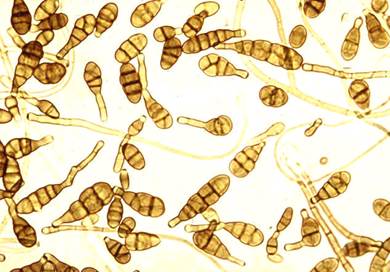
Figure 73 - Conidia of Alternaria tenyies
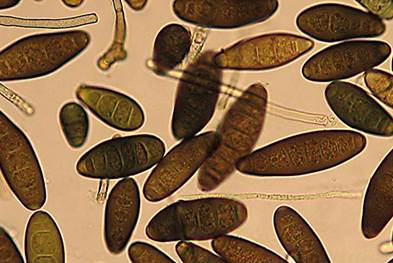
Figure 74 - Conidia of Bipolaris sorokiniana