
5.3 Seasonal and multi-year dynamics of phytopathogens of spring wheat in the North-East of Kazakhstan
Thus, the weather conditions during the vegetation period in the North-East of Kazakhstan from 2022 to 2024 were favourable for the development of wheat pathogens and diseases caused by these microorganisms.
The monitoring in the region revealed Fusarium root rot, with species of the genus Fusarium (F. culmorum, F. avenaceum, F. graminearum, F. oxysporum, etc.) as the causative agents. Infection occurred throughout the wheat plant's development stages, starting from the complete shoots phase (around 1%) to full grain ripeness (up to 30%), with conidia spreading through the air and droplets. The disease's development increased during periods of dry and warm weather with insufficient moisture, and mechanical damage by phytophagous insects also contributed to its spread.
The dominant pathogen identified in the study was Bipolaris sorokiniana, causing helminthosporium root rot. The disease manifested as browning of the coleoptile, yellowing, and deformation of leaves, and overall plant stunting in seedlings and emergence stages of wheat. In later stages of vegetation, infected plants showed rotting, browning, and blackening of primary and secondary roots, as well as the tillering node and the lower part of the stem. helminthosporium root rot was observed in every stage of wheat vegetation, ranging from 5% to 40%. In later stages, Bipolaris sorokiniana contributed to the development of spot blotch, characterised by light brown spots surrounded by chlorosis on leaf blades. Among the plants affected by this disease, 12% showed browning and shrivelling, 8% exhibited white heads, and 8% had black spots caused by Bipolaris sorokiniana. The development and spread of this pathogen in the North-East of Kazakhstan were influenced by prolonged drought and optimal air temperatures (22-26 °C). The pathogen showed a tendency to increase in dense plantings, agroecosystems with deep seed burial, and contaminated plantings, which served as reservoirs for pathogenic infection.
The study also found that when spring wheat was sown after a complete fallow as the preceding crop, the incidence of plants infected by B. sorokiniana did not significantly increase, although soil contamination with this pathogen increased by 1.5-2 times.
The prevalence of root rot in the first crop of spring wheat averaged 38.6% over 3 years, with a development rate of 10.2%. On continuous plantings, the prevalence was 54.3% with a development rate of 14.8%. Soil contamination with B. sorokiniana conidia ranged from 32 to 64 per g of soil, depending on the preceding crops in the crop rotation. When spring wheat was continuously cultivated for more than 10 years, soil contamination reached 97 conidia per g of soil (Figure 28). In certain years and regions, the disease developed more intensively when preceded by complete fallow compared to the second and third crops. This can be attributed to two factors: firstly, the field under complete fallow was allocated after a susceptible predecessor (e.g., barley); secondly, favourable conditions for the growth and development of both spring wheat and the pathogen are created when wheat is sown after complete fallow in the steppe zone.
In a grain-fallow crop rotation, depending on the year and climatic conditions, the prevalence of root rot in spring wheat during the heading and milky ripeness stages ranged from 14.9% to 33.6% after complete fallow and from 23.5% to 45.8% after spring wheat preceding (Figure 29).
Thus, the most optimal phytosanitary situation was observed in legume-grain, grain-cultivated, and grain-forage crop rotations after leguminous and oilseed crops. Lentils were found to be the best preceding crop for spring wheat in terms of phytosanitary conditions, while barley was the worst.
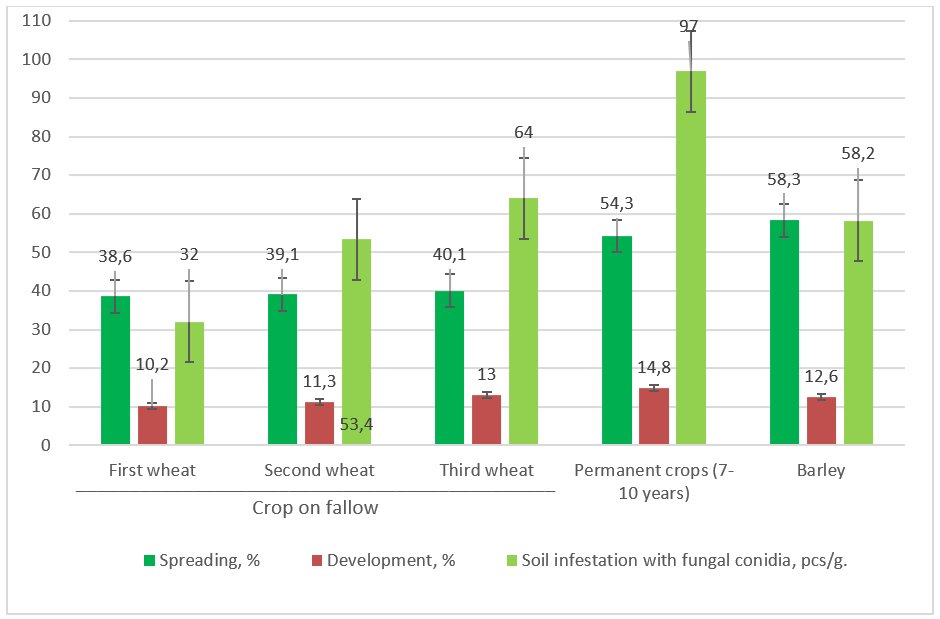
Figure 28 - Influence of preceding crops on the prevalence of wheat root rot in agroecosystems
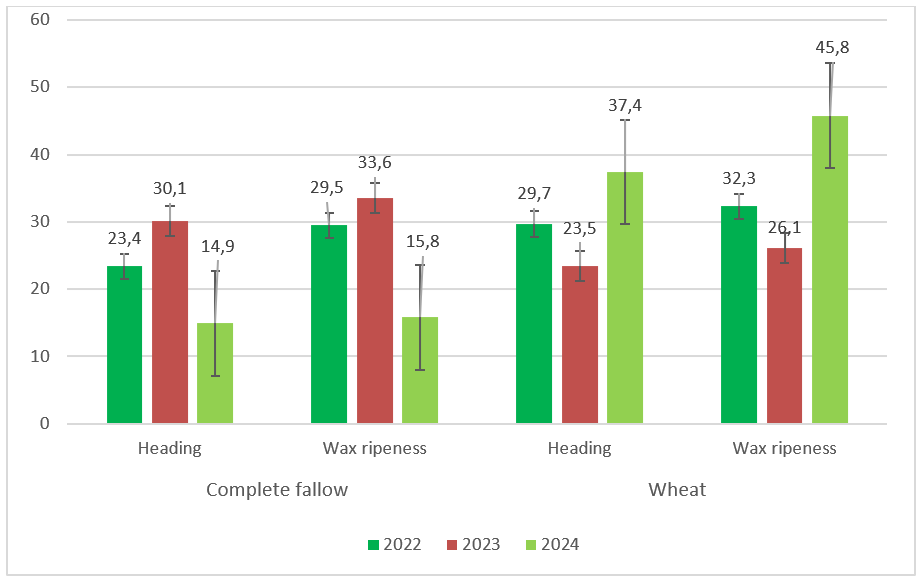
Figure 29 - Prevalence of root rot in spring wheat cultivation in a grain-fallow crop rotation
Pathogens of the Alternaria genus were found to be the dominant species identified in our seed material phytosanitary examination (Table 3, Figure 25). The pathogen was isolated in almost every sample during the seed material phytosanitary examination. When seed material was treated with fungicides before sowing, Alternaria spp. was detected in small amounts (2-5% infection) in these agroecosystems. In cases where seeds were not chemically treated before sowing, the pathogen was present in up to 80% of samples, with disease prevalence reaching 40%. During the crop's vegetation, this pathogen developed from the heading phase, affecting the grain and causing symptoms of the black embryo. Alternaria spp. primarily penetrated the seed, with fungal mycelium mainly detected in the fruit coat and rarely reaching the endosperm. Visually, the disease is caused by Alternaria spp. appeared as dark spots on the spike scales of the crop. The development of alternaria leaf blight was favoured by high temperatures and high relative humidity during the flowering and milky ripeness stages [48-50].
The pathogen Septoria nodorum, which causes septoria leaf blotch, was found to be widespread during our monitoring. This phytopathogen has a wide range of infections, affecting all above-ground organs of wheat (leaves, stems, spike rachis, spike scales, and grains). The spread of the pathogen occurs from the full emergence stage to tillering. Visually, septoria leaf blotch appears as light beige or light brown spots with a chlorotic border or without it. A distinguishing feature of this disease is the presence of small black pycnidia on the surface of the spot. Climatic conditions that favour disease development and pathogen spread include abundant rainfall combined with warm weather during the crop's growing season, high doses of nitrogen fertilisers, as well as overdosing with growth regulators and herbicides. This phytopathogen was predominant in the Zhelezins and Terenkol districts of the study, where the agroclimatic conditions were favorable for the fungus's development.
Our research conducted in the North-East Kazakhstan in 2024 showed that the severity of septoria leaf blotch in spring wheat agroecosystems depends mainly on the preceding crop. We found that the disease develops more intensively in continuous wheat cultivation, as the infection pathogen is retained there.
It is noted that under humid weather conditions in the first half of the crop's growing season, early-sown spring wheat with higher plant density is primarily affected by Septoria nodorum, followed by medium- and late-sown crops. In the latter, septoria leaf blotch develops more intensively and causes greater damage. Usually, septoria leaf blotch manifests itself during the heading phase of the crop, developing most severely on early and medium planting dates with low plant density.
The most severe development of septoria leaf blotch occurs at an air temperature of 14-17 °C with 17 mm of rainfall during the stem elongation and grain filling stages. Infection by Septoria nodorum occurs in the presence of liquid moisture for at least 8 hours at an optimal air temperature of 20-22 °C and high humidity for several days.
Common bunt, caused by the fungus Ustilago tritici (Pers.) Yensen, was detected in all regions of the research area, but only in agroecosystems of spring wheat with untreated seed material without fungicide treatment before sowing and during the growing season. Active dispersal of teliospores of the pathogen was detected during the flowering period of the crop. The spread of the disease was observed in only 5% of cases on the lower part of the wheat.
Three-year research in the North-East Kazakhstan showed that the pathogens of brown rust (Puccinia recondita) and powdery mildew (Blumeria graminis) mainly overwinter on winter wheat seedlings, where they exhibit their pathology earlier, and then spread to nearby spring wheat crops.
The preceding crops of wheat do not play a significant role in the spread of these diseases. However, it has been observed that, as obligate parasitic forms, these phytopathogens develop intensively in spring wheat crops following complete fallow, where there is a higher nitrogen content and better soil moisture accumulation.
Our research conducted in the steppe zone of the North-East of Kazakhstan also confirmed the fact that the spread of diseases in spring wheat through airborne infection depends more on the climatic conditions during the crop's growing season than on the sowing dates of the seed material. In 2024, the first half of summer was extremely dry, and under such conditions, leaf rust spread late, from the end of July to early August. Early plantings were in the milk-waxy and waxy grain development stages and thus were not severely affected, while the disease only manifested itself in late plantings. For example, ‘Omskaya 35’, sown on complete fallow on May 26, was infected with the disease by 9.2%, and on June 6, by 13%. ‘Uralosibirskaya’ was affected by 13.5% and 8.5%, respectively.
Thus, leaf rust manifests itself during the grain filling stage of spring wheat under dry conditions in the first half of the growing season and more humid conditions in the second half. It develops more strongly in the late stages of vegetation.
The main diseases of spring wheat caused by phytopathogens and identified during the monitoring process are presented in Figure 30.
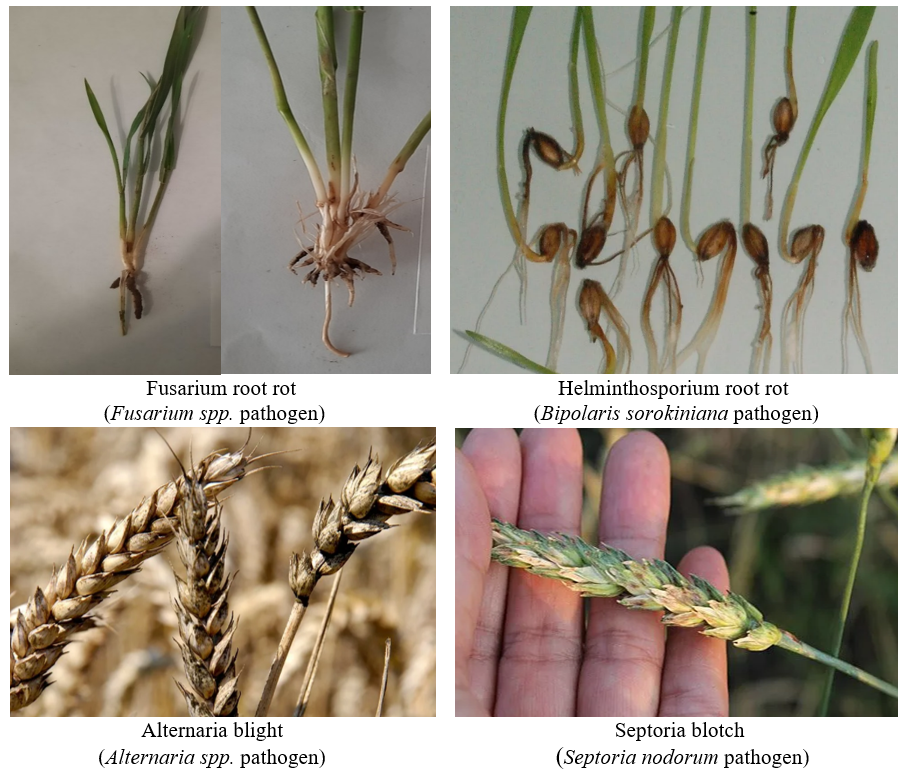
Figure 30 - Diseases of spring wheat caused by phytopathogens
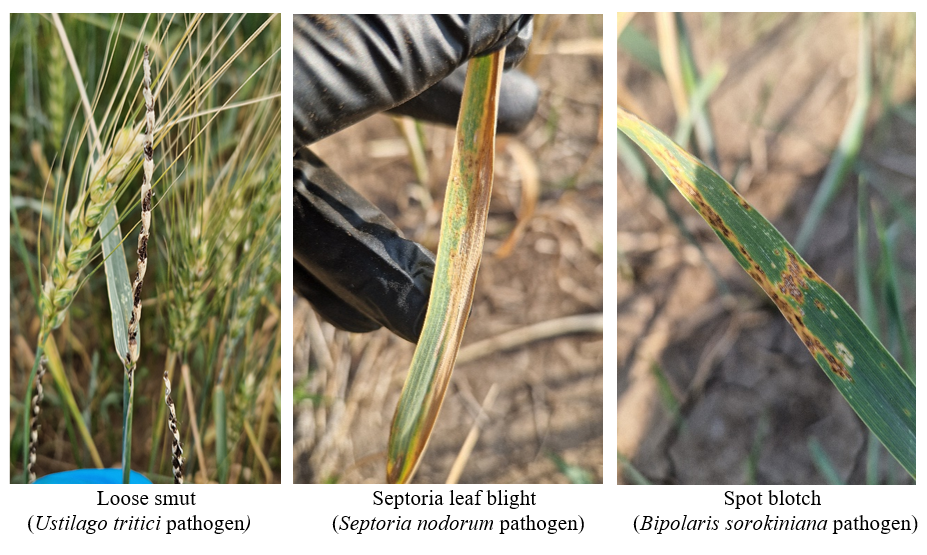
Примечение – Фотографии сделаны в период проведения мониторинга в агроценозах яровой пшеницы
Note - The photographs were taken during the monitoring period in spring wheat agroecosystems
Using paired correlation analysis, we established a dependence between the occurrence of diseases and the climatic conditions in the research region. Our research revealed that the spread of pathogens and the development of leaf-stem infections directly depend on the hydrothermal conditions in the first half of the spring wheat growing season.
With a hydrothermal coefficient of over 1.2 in June and the first two decades of July, there is a high probability of brown rust developing and spreading up to 70%. However, septoria leaf blotch negatively responds to the hydrothermal coefficient and positively to an increase in temperature.
Our three-year observations showed that spring wheat crops are simultaneously affected by septoria leaf blotch and brown rust, with one disease dominating over the other depending on the climatic conditions during the crop's vegetation period. In conditions of humidity and cool summer weather, septoria leaf blotch predominates, while in a warm growing season, brown rust prevails. We conducted a paired correlation analysis of the three-year dynamics of the spread of septoria leaf blotch and brown rust based on the weather conditions during the vegetation period. Correlation coefficients for the three-year dynamics of the spread of these diseases were calculated depending on the climatic conditions (Table 4).
Table 4 - Correlation coefficient of the three-year dynamics of the spread of septoria leaf blotch and brown rust based on weather conditions during the vegetation period
|
Month |
Average daily air temperature, ⁰С |
Total rainfall, mm |
Number of days with rainfall greater than 1 mm |
Relative humidity, % |
Air saturation deficit, m/bar |
Number of days with humidity greater than 30% |
|
Leaf rust (Puccinia recondite pathogen) |
||||||
|
June |
–0,08 |
0,88 |
0,13 |
0,22 |
– |
– |
|
July |
–0,26 |
0,83 |
0,55 |
0,52 |
–0,10 |
–0,52 |
|
August |
–0,12 |
0,92 |
0,23 |
0,42 |
–0,37 |
–0,43 |
|
Septoria leaf blotch (Septoria nodorum pathogen) |
||||||
|
June |
–0,12 |
0,28 |
0,08 |
0,34 |
–0,03 |
– |
|
July |
–0,25 |
0,55 |
0,74 |
0,74 |
–0,52 |
–0,75 |
|
August |
–0,14 |
0,03 |
0,10 |
0,41 |
–0,30 |
–0,25 |
It has been established that in the North-East of Kazakhstan, the index of the area affected by brown rust is closely correlated with the precipitation sum in June-August of the vegetation period (r=0.83-0.92), relative humidity in July and August (r=0.42-0.52), and the number of days with precipitation exceeding 1 mm in July (r=0.55). A negative correlation was found between the analysed indicator and the number of days with humidity above 30% and an air saturation deficit in August (r=-0.37-0.43). Analysis of the correlation dependence of septoria leaf blotch spread revealed a connection with the rainfall sum in July (r=0.55), the number of days with rainfall exceeding 1 mm, and relative humidity in July (r=0.74). Temperature indicators did not have a significant influence on the spread of the disease.
It has been established that in the North-East of Kazakhstan, the index of the area affected by brown rust is closely correlated with the precipitation sum in June-August of the vegetation period (r=0.83-0.92), relative humidity in July and August (r=0.42-0.52), and the number of days with precipitation exceeding 1 mm in July (r=0.55). A negative correlation was found between the analysed indicator and the number of days with humidity above 30% and an air saturation deficit in August (r=-0.37-0.43). Analysis of the correlation dependence of septoria leaf blotch spread revealed a connection with the rainfall sum in July (r=0.55), the number of days with rainfall exceeding 1 mm, and relative humidity in July (r=0.74). Temperature indicators did not have a significant influence on the spread of the disease.
Our research showed that in the conditions of Northeast Kazakhstan, under favourable climatic conditions and the presence of pathogenic infection, root rot manifests itself at all stages of crop vegetation, leaf rust manifests itself in the flag leaf stage, and in some years, in the milky-ripeness stage, while septoria leaf blotch occurs during the stem elongation period.