
1.6 Butterflies - Lepidoptera
1.6.1 Large nutmeg - Apamea anceps (Denis and Schiffermüller) (Lepidoptera, Noctuidae
The butterfly's wingspan spans from 38 to 42 mm and it has a robust physique. Its body is grey, and the forewings are greyish without a black longitudinal stripe, presenting a grey fringe along with fine, sporadic dark bands. The hindwings appear distinctly lighter (Figure 29).
The egg measures between 0.25 to 0.3 mm in height and 0.4 to 0.5 mm in diameter, with 36 flat radial ridges. It starts as light pink and gradually darkens to a brownish shade.
The caterpillar can reach a length of up to 30 mm, with chitinous bases on its bristles. Its colouration is brownish-grey, adorned with three pale stripes (Figure 30).
The pupa is reddish-brown, ranging from 15 to 20 mm in length.
Distribution. This species can be found throughout the CIS, specifically in the forest, forest-steppe, and steppe regions of the European section, including places like the Caucasus, Ural, Western Siberia, and Northern Kazakhstan. It is widely spread across the Transpalaearctic zone.
The mature caterpillars enter a dormant state in a sheltered spot beneath the soil. As the weather warms in spring, they begin to feed on young cereal plants before pupating in the soil during May. The adult butterflies emerge between May and June. Female butterflies deposit their eggs on the ovary within the ear of the plant. The egg count can reach up to 2,600, according to K.A. Slivkina.
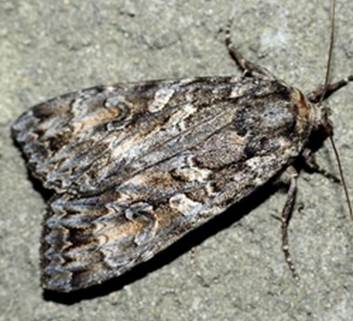
Figure 29 - Large nutmeg - Apamea anceps (Denis and Schiffermüller)
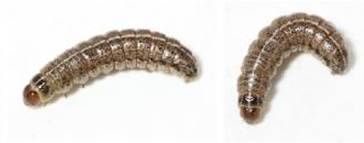
Figure 30 - Large nutmeg larva - Apamea anceps (Denis and Schiffermüller)
1.6.2 Rustic shoulder-knot - Apamea sordens (Hufnagel) (Lepidoptera, Noctuidae)
The butterfly has a wingspan ranging from 32 to 42 mm and possesses a robust body. Its body is grey in colour, while the forewings are a greyish-brown, featuring a black longitudinal line near the base, a grey fringe, and fine, intermittent dark bands. The hindwings are either the same shade or lighter (see Figure 31).
The egg is light yellow in colour and features 34 to 36 shallow, radial ridges. Its dimensions range from 0.35 to 0.37 mm in height and 0.48 to 0.52 mm across.
The larva can reach a length of up to 36 mm and has a greyish-brown body marked by a pale yellow stripe along its back, with fainter whitish lines running lower along the sides (Figure 32).
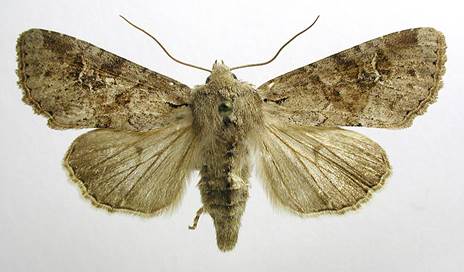
Figure 31 - Rustic shoulder-knot - Apamea sordens (Hufnagel)
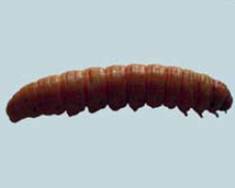
Figure 32 - Rustic shoulder-knot larva - Apamea sordens (Hufnagel)
The pupa, is reddish-brown and typically measures between 15 and 20 mm in length.
Distribution. This species inhabits steppe and forest-steppe zones throughout both the European and Asian territories of the former Soviet Union, including regions such as the Caucasus, Eastern Siberia, the Far East, and Central Asia. It is classified as a Holarctic species, with a distribution spanning across the northern continents.
Mature larvae spend the winter hidden in soil, crop stubble, or straw remnants. As temperatures rise in spring, they pupate, and adult moths or butterflies begin to appear between May and July. Females deposit their eggs either on the cereal ears or beneath the leaves of host plants. The young larvae feed by consuming the grain's inner content. Following harvest, they continue feeding on spilled grain left in the fields as well as on stored supplies. This insect species goes through one full life cycle annually.
Harmfulness. The larvae pose a significant threat to winter cereals and corn, leading to considerable crop damage.