
1.7 Hymenopterans - Hymenoptera
1.7.1 Black wheat stem-sawfly - Trachelus tabidus F. (Hymenoptera, Cephidae)
This insect measures between 7 and 10 mm in length and is black in colour, often displaying yellow markings along the sides of the abdomen or sometimes featuring longitudinal yellow stripes. Its antennae consist of 21 to 22 segments, gradually thickening beyond the 10th segment into a faintly club-like shape (Figure 33).
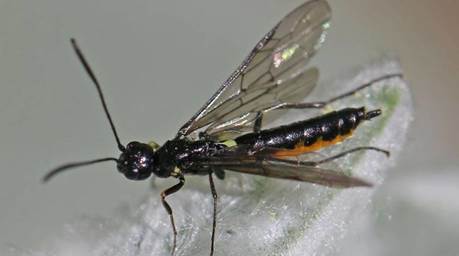
Figure 33 - Black wheat stem-sawfly - Tracheus tabidus F.
The egg is oval, slightly bent, and white in colour, measuring approximately 1 mm long and 0.25-0.28 mm wide.
The larva reaches a maximum length of around 15 mm and has a characteristic curved, S-like shape. Its body is yellowish, and the head is light brown. The last abdominal segment is equipped with 14 to 26 fine spines, usually organised in two or three distinct rows.
Distribution. This species is found in the steppe regions of the European part of the former USSR, including the Caucasus. It is also present in Western Europe, Asia Minor, and North Africa, and has been introduced into North America.
The species follows a developmental pattern and causes crop damage similar to that of the European wheat stem sawfly. However, the appearance and activity of the adults are typically delayed by about two to three weeks.
1.7.2 European wheat stem sawfly - Cephus pygmaeus (L.) (Hymenoptera, Cephidae)
This species grows to a length of 8 to 10 mm. Its body is mostly black, with yellow markings on the thorax near the base of the forewings, and yellow stripes on the 4th and 6th segments of the abdomen. Occasionally, there are also yellow markings on the 3rd and 7th segments, particularly in males. The antennae have 18 to 21 segments, and they gradually become slightly spindle-shaped towards the tip (Figure 34).
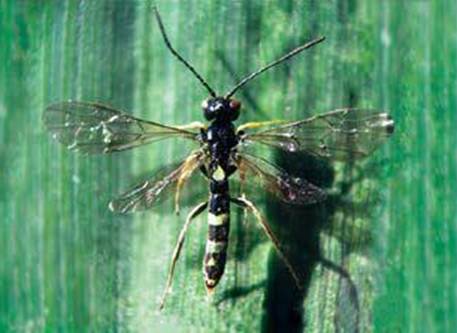
Figure 34 - European wheat stem sawfly - Cephus pygmaeus (L.)
The egg is white, oval in shape, and slightly curved, measuring approximately 0.9 mm long and 0.3 mm wide.
The larva can reach up to 14 mm in length and has an S-shaped body. It is yellowish in colour, with a light brown head (Figure 35).
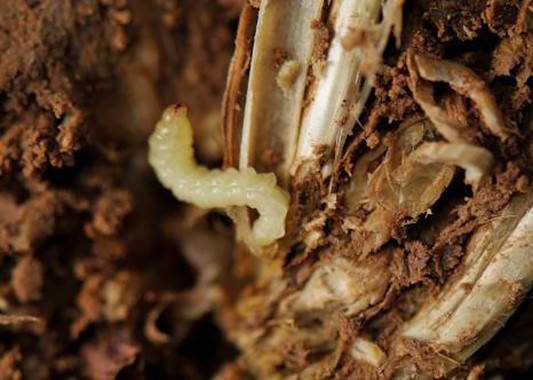
Figure 35 - European wheat stem sawfly larva - Cephus pygmaeus (L.)
The last segment of the body is equipped with 6 to 9 small spines, arranged in a single row.
Distribution. This insect is found across the steppe and forest-steppe regions of the European part of the former USSR, including the Caucasus, Southern Siberia, and Central Asia. Its range also extends to Western Europe, the Middle East, North Africa, the Indian subcontinent, and Southeast Asia. It has been introduced to North America as well.
During its final larval stage, the insect spends the winter inside a protective cocoon at the base of cereal stems (Figure 35). Pupation typically takes place between April and May. The adult insects begin to emerge in mid-May, which coincides with the flowering of viburnum and white acacia, reaching their peak flight period when winter cereals begin to head. The adults also feed on various types of weeds. Females lay between 35 and 50 eggs, usually one at a time, within the stem just below the ear. As the larva feeds, it descends to the base of the stem, where it completes its development. Before pupating, it creates a circular cut slightly above the ground, which weakens the stem and can cause it to break. This species completes a single generation each year.
Harmfulness. This pest inflicts damage on winter cereal crops, leading to yield reduction and increased risk of lodging in mature stems.