
2.1 Orthopterans
2.1.1 Asian migratory locust (LMI) - Locusta migratoria (L.) (Orthoptera, Acridoidea)
This is a relatively large insect, measuring between 29 and 55 millimeters in length, with wings spanning from 45 to 60 millimeters (Figure 48). Its colouration can range from green to various shades of sandy yellow or brownish yellow, with some individuals displaying a more uniform colour, while others show variability. Characteristically, broad dark stripes are present along the head, across the entire pronotum, and along both sides of the scutellum, extending down the midline. The pronotum has a sharp longitudinal carina in the middle.
The egg measures 7 mm in length and is covered with spines. The egg pod, typically ranging from 50 to 76 mm in length and displaying a slight curvature, contains between 55 and 115 eggs, generally organised into four distinct rows.
This locust species displays phase polymorphism, alternating between solitarious and gregarious forms. In the solitarious phase, the median ridge (carina) on the pronotum appears arched, and the hind femora exhibit a yellowish hue. In contrast, individuals in the gregarious phase possess a straighter or subtly concave pronotal carina and reddish hind femora.
Distribution. This species is distributed across a broad region, including the southern part of the European CIS territories (notably the Caucasus), southern Siberia extending to the Russian Far East (Primorye), Kazakhstan, and Central Asia. Its presence is also recorded in Southeast Europe, North Africa, Asia Minor, the Middle East, as well as Iran, Afghanistan, Pakistan, northern regions of India, western and northern China, Mongolia, the Korean Peninsula, and Japan, including Kunashir Island.
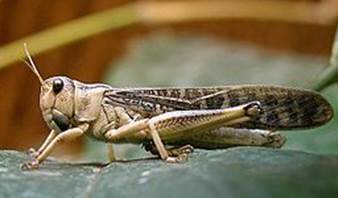
Figure 48 - Asian migratory locust (LMI) - Locusta migratoria (L.) (Jakobson and Bianki)
The eggs are laid in soil pods at depths of approximately 5-6 cm, where they remain throughout the winter. With the onset of spring, nymphs emerge and undergo development over a period of 30 to 50 days. Reproductive output may reach as many as 120 eggs per female. The life cycle is typically univoltine, with one generation per year. The gregarious form is capable of extensive migratory movements, with adult swarms traveling distances of up to 300 kilometers.
Harmfulness. Swarming and migratory populations of locusts pose a severe threat to agriculture, with the potential to devastate entire fields. Over the course of its life, a single insect can consume between 300 and 500 grams of fresh plant matter (Dolzhenko, 2003).
During outbreak years, when insect densities are especially high, the most serious agricultural damage is often associated with gregarious species - particularly the migratory locust and the Italian locust - as they move en masse into cultivated areas. Among non-gregarious forms, several species are also considered economically damaging. These include the Siberian locust, the dark-winged locust, the cross locust, the speckled locust, the black-striped locust, and the Atbasar locust, among others (Naumovich, Stolyarov, Dolzhenko et al., 2000; Dolzhenko, 2003).
2.1.2 Italian locust - Calliptamus italicus (L.)
This relatively large insect ranges in body length from approximately 14.5 to 41.1 mm. Its colouration varies widely, with individuals exhibiting shades such as greyish brown, reddish tones, yellow-brown, pale brown, or even off-white. The pronotum has distinctly pronounced lateral carinae. The thorax between the forelegs has a strong, blunt projection. The forewings are narrowed at the apex, with sparse venation and numerous blackish spots of varying sizes. The wings are slightly shorter than the forewings, narrow with very sparse venation, and pink at the base. The inner sides of the hind leg femora are pink with a pair of incomplete dark bands that may sometimes be absent. The hind leg tibiae are red or pink, more rarely whitish with a slight pinkish tint. The cerci are expanded towards the apex in profile (Figure 49).
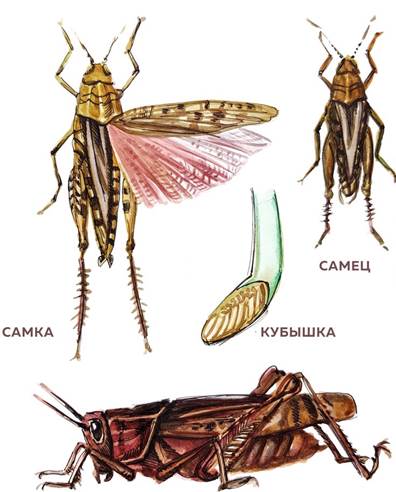
Figure 49 - Italian locust - Calliptamus italicus (L.)
In the Italian locust, as well as in other gregarious acridids, morphological variability in the imaginal stage is observed depending on population density.
Gregarious phase of imago: The length of the forewings increases (male: 20.4-22.3 mm; female: 27.2-29.4 mm). The forewings extend beyond the hind knee by 3.6-4.4 mm in males and by 4.7-5.6 mm in females.
Solitarious phase of imago characterised by shortened wings. The wing length in males is 17.1-18.2 mm; in females, it is 25.4-26.2 mm. The forewings extend beyond the hind knee by only 1.2-1.9 mm in males and by 1.8-2.2 mm in females.
Sexual dimorphism: Males and females differ in the structure of their genitalia. Secondary sexual characteristics:
Male: The lower tooth of the cerci is weak and significantly shorter than the upper and middle ones. Body length: 14.5-25 mm.
Female: The ovipositor is present at the end of the abdomen. Body length: 23.5-41.1 mm.
Egg: Length: 4-5 mm; width: 1-1.3 mm. Colour: reddish or pale yellow, matte. The surface has a distinct sculpture consisting of tubercles and narrow ribs. The lower part of the egg is thickened, tapering towards both ends.
Pod: Length: 22-41 mm; curved, with the lower half slightly thickened.
Nymph: Imago-like. A carina is located on the pronotum.
Distribution. The Italian locust is found in the southern European part of Russia, in the Caucasus, Central Asia, and Kazakhstan. Its range includes Western Europe, North America, Western Asia, and Iran.
Imago inhabits various wild biotopes. In the forest-steppe zone, this species is associated with light sandy soils and chalk deposits; in the steppe zone, it is found in wormwood and wormwood-cereal steppes, solonchaks, and old fallows.
At low population densities, imagos tend to be solitary. An increase in population density leads to gregarious behavior and the appearance of individuals in the gregarious phase. Swarms of locusts (kuliqi) cause individual behaviors to conform to common rules. They undertake collective migrations (flights). Imagoes can fly distances of several dozen kilometers, but can be carried much further by air currents.
Harmfulness. The Italian locust damages various plants during the imago and nymph stages. This pest is a wide polyphage and can successfully develop by feeding on almost all plants within its habitat range. It is particularly harmful during the gregarious phase and feeds on cereal grains, legumes, oilseeds, vegetables, technical crops, melons, grapes, and more. It is most dangerous in irrigated agricultural zones.