
4.8 Tan spot (Yellow leaf spot, or Pyrenophorosis)
The symptoms closely resemble those caused by the fungal pathogens Septoria nodorum and S. tritici. The disease primarily affects the foliage, where small, initially round to oval lesions begin to form. These spots are typically yellow to light brown and are often surrounded by a chlorotic halo. Over time, the lesions enlarge rapidly and frequently coalesce, creating elongated streaks along the leaf surface (Figure 71). In addition to the leaves, the infection can extend to the stem internodes, where it appears as irregular dark brown or pale discolourations, and occasionally, the glumes may also show signs of infection. The disease tends to reach its peak intensity during the heading to early grain filling stages. In cases of significant infection, leaf tissue starts to desiccate beginning at the tips. Under conditions of elevated humidity, fungal growth becomes visible on affected plant parts in the form of a greyish-white to dark grey mycelium, often accompanied by sporulation. The fungus produces conidiophores that emerge through the stomata either individually or in clusters. These structures vary in length from approximately 10-20 up to 400 micrometers. The conidia themselves are typically cylindrical, either straight or slightly curved, and range in colour from yellowish to yellow-brown. Their size can vary between 20-75 to 270 × 10-24 micrometers, and they generally contain between 2-3 up to 8-10 septa. The fungus has a sexual stage - Pyrenophora tritici-repentis Drechs., which forms on crop residues.
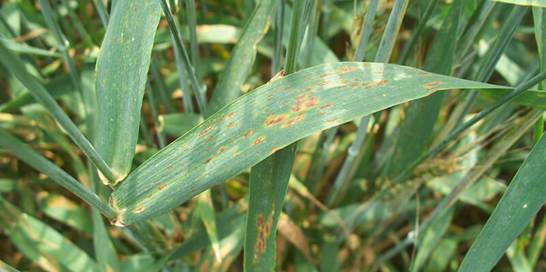
Figure 71 - Wheat leaves affected by yellow leaf spot
The optimal temperature for the growth and sporulation of the fungus D. tritici-repentis is 20-25 °C; frequent and abundant precipitation enhances the development of the disease.